People ask why I keep a tablet next to my e-reader. It seems like a contradiction. I spent years telling anyone who would listen that e-ink was the only way to read comfortably, and I still believe that for novels. But this June I added a Samsung Galaxy Tab A11+ to my little collection of reading devices, and it turned out the two do different jobs. The e-reader is for the book. The tablet is for everything around the book.
I am Corinne, a retired middle-school librarian in Columbus, Ohio. I read two or three books a week, mostly mysteries and historical fiction, and I borrow most of them through the library's digital lending. I have owned the Samsung tablet for about four months now, and I have settled into a rhythm with it that surprised me. It is not my bedtime reader. It is not my armchair reader. It is the device I reach for when the book has pictures, or when the book is actually a magazine, or when I need to see a recipe and actually cook from it.
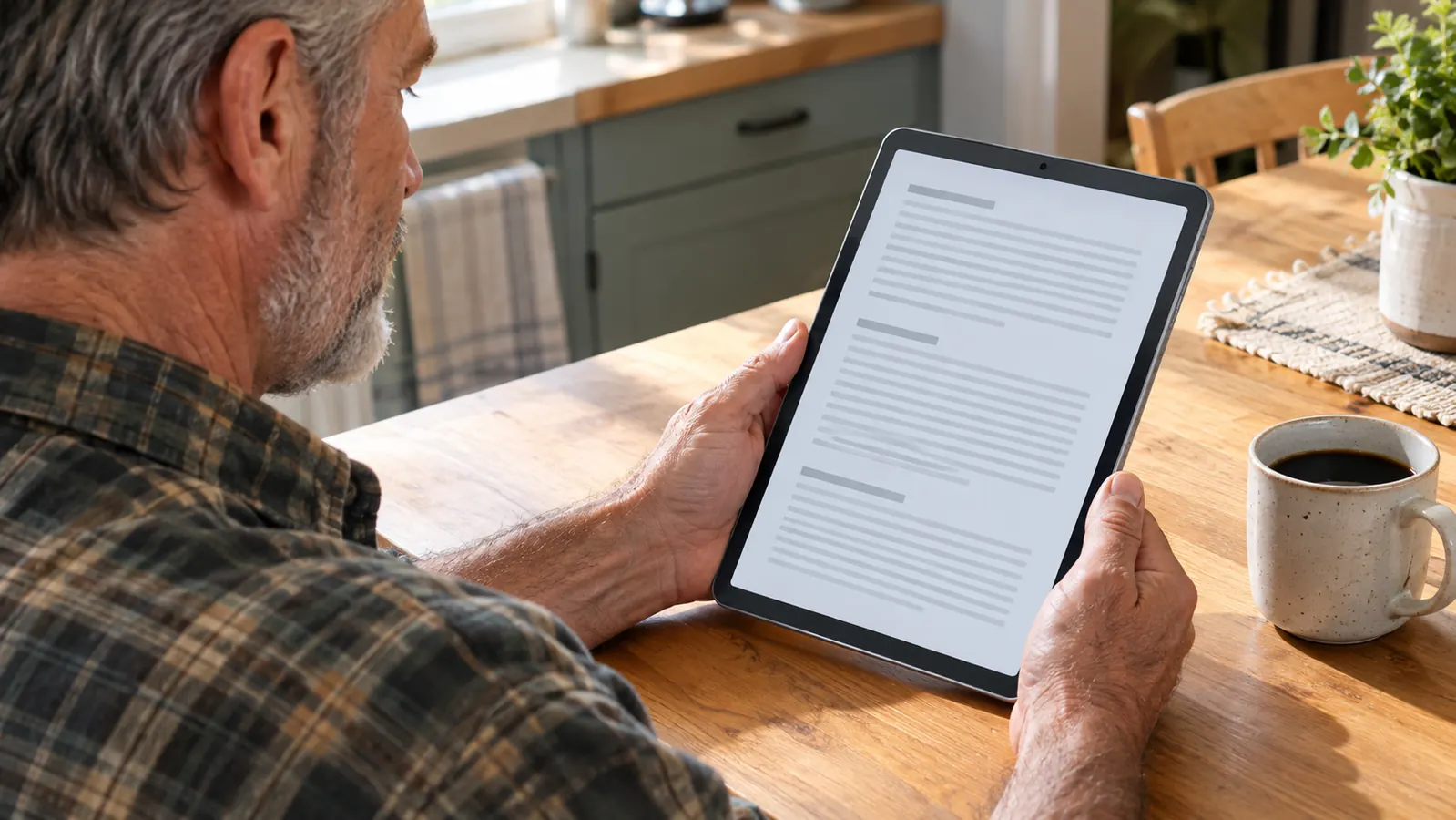
The moment I knew the tablet had earned its place was a Tuesday in August. I had a PDF from the library, a history of the Ohio and Erie Canal with maps and old photographs, and I had been squinting at it on my e-reader for two evenings. The maps were too small. I could zoom, but the page turns felt clumsy and the grayscale photos looked like smudges. I moved the PDF to the Samsung tablet, and suddenly I was reading it the way I would have read a paper book from the library: map on one side, text on the other, everything clear.
That is the thing nobody tells you about reading gear. The best device is the one that fits the book in your hand right now. A novel with nothing but words belongs on my Paperwhite. A cookbook with a photograph of every dish belongs on the Samsung. A magazine with a glossy layout belongs on the Samsung. A biography I want to scribble in belongs on my Scribe. I do not have to pick one device and defend it. I can keep the right tool next to the right chair.
The e-reader is for the book. The tablet is for everything around the book.
The tablet that earns the spot next to your e-reader
If you read cookbooks, magazines, PDFs or anything with pictures, the Samsung Galaxy Tab A11+ is the practical second device. Check today's price on Amazon and see if it fits your reading corner.
Amazon Check Today's Price on Amazon →I should be clear about what the Samsung tablet does not do. It does not replace my e-reader at night. The screen is a bright backlit LCD, and even with the eye comfort setting on, it is harder on my eyes at bedtime than e-ink. My Paperwhite stays in bed with me, warm light on, every single night. The Samsung lives on the kitchen counter and the couch, and it is a daytime device. That division is the whole reason the arrangement works. I am not asking one screen to be perfect at everything.
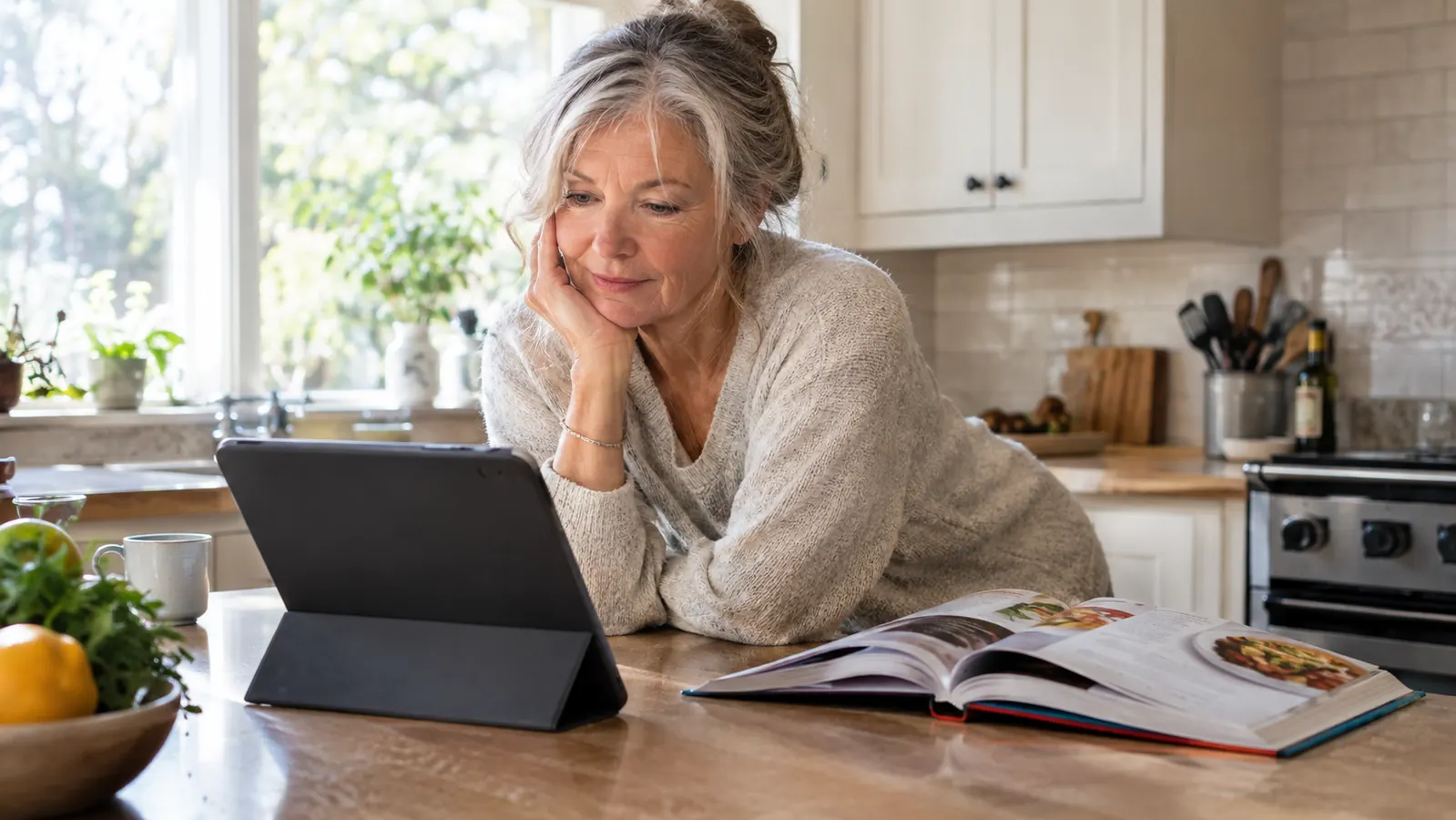
What the Samsung does well is the stuff e-ink does poorly. Cookbooks are the best example. I have a stack of them, and I used to photocopy recipes or prop a heavy book against the backsplash. Now I prop the tablet on the counter, and the recipe stays open while I chop. The screen is 11 inches, which is close to a real cookbook page, and the colors matter when you are trying to tell whether the onions are caramelized enough. I have made at least a dozen recipes this way, and I have stopped printing recipes altogether.
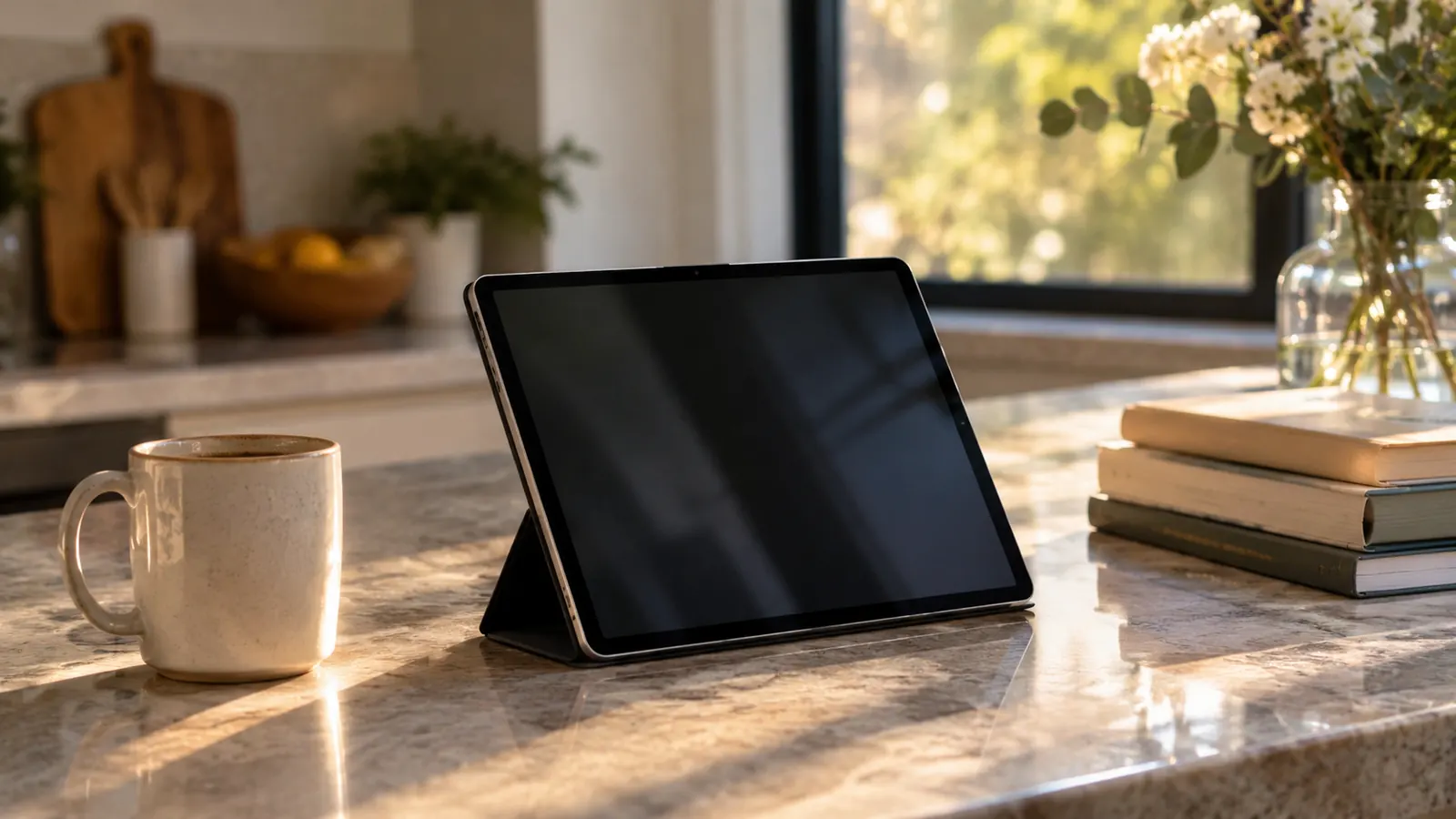
Magazines are the second win. My library lends digital magazines through an app, and on the Samsung they look like the paper version. The layout holds together, the photographs are bright, and I can read a long article without constant zooming. I read two or three magazines a month on it, mostly food and history titles. It has also become my video call device, because the screen is big enough that I can actually see faces instead of holding a phone at arm's length.
The library apps matter more than I expected. The Samsung runs the same Libby, Kindle and Kobo apps I already use, so a hold that comes in for a picture-heavy book can go straight to the tablet. I do not have to remember which device a book lives on. The library loan just lands where I choose. For a person who borrows most of her reading, that flexibility is the practical part. It is the difference between a device that fits your habits and a device that asks you to change them.
Storage has not been a worry. I chose the 128GB version, and the tablet also takes a microSD card if I ever fill it. I keep a few cookbooks and magazines downloaded, and I have not come close to running out. The screen is bright enough for a sunny kitchen, which is where it spends most afternoons. It is not my porch reader the way the Paperwhite is, and it stays indoors, but for a magazine on the couch it does the job without a fight.
What I'd Tell You If We Were Sitting at My Kitchen Table
If you were sitting at my kitchen table with a cup of coffee, here is what I would say. Do not buy a tablet because you think it will replace your e-reader. Buy one because there are books your e-reader cannot show you properly. If you read nothing but novels, keep your e-reader and save your money. If you read cookbooks, magazines, PDFs, graphic novels or anything with photographs, a tablet like the Samsung Galaxy Tab A11+ is worth a spot on your counter.
I would also tell you to be honest about when you read. If most of your reading happens in bed at night, an LCD tablet will not serve you the way e-ink does. Keep the e-reader for that. Use the tablet for the daytime reading, the cooking, the magazines, the video calls. The two devices are not competitors. They are different tools, and a reading life is richer when you stop trying to make one screen do everything.
See if the Samsung Galaxy Tab A11+ fits your reading corner
It is the practical second device for readers who want cookbooks, magazines and PDFs to finally look right. Check today's price on Amazon.
Amazon Check Today's Price on Amazon →