
I spent 32 years shushing kids for writing in library books. Margin notes, underlined passages, a little star next to a good line, I saw all of it, and I gently explained why we don't do that. So it feels like a small betrayal to admit what I did last month, at my own kitchen table, with a book I borrowed from the library: I wrote in it. On purpose. With a pen. And then I deleted it.
The book was a biography I'd been waiting on for weeks, and I wanted to argue with the author in the margins the way I used to argue in the margins of my own paperbacks. But it was a library loan, so the pages had to stay clean. That's when I remembered the Amazon Kindle Scribe I'd bought in May for my Friends of the Library volunteer notes. I'd been using it as a very expensive notebook. It turns out it's also the answer to a problem I didn't know I had.
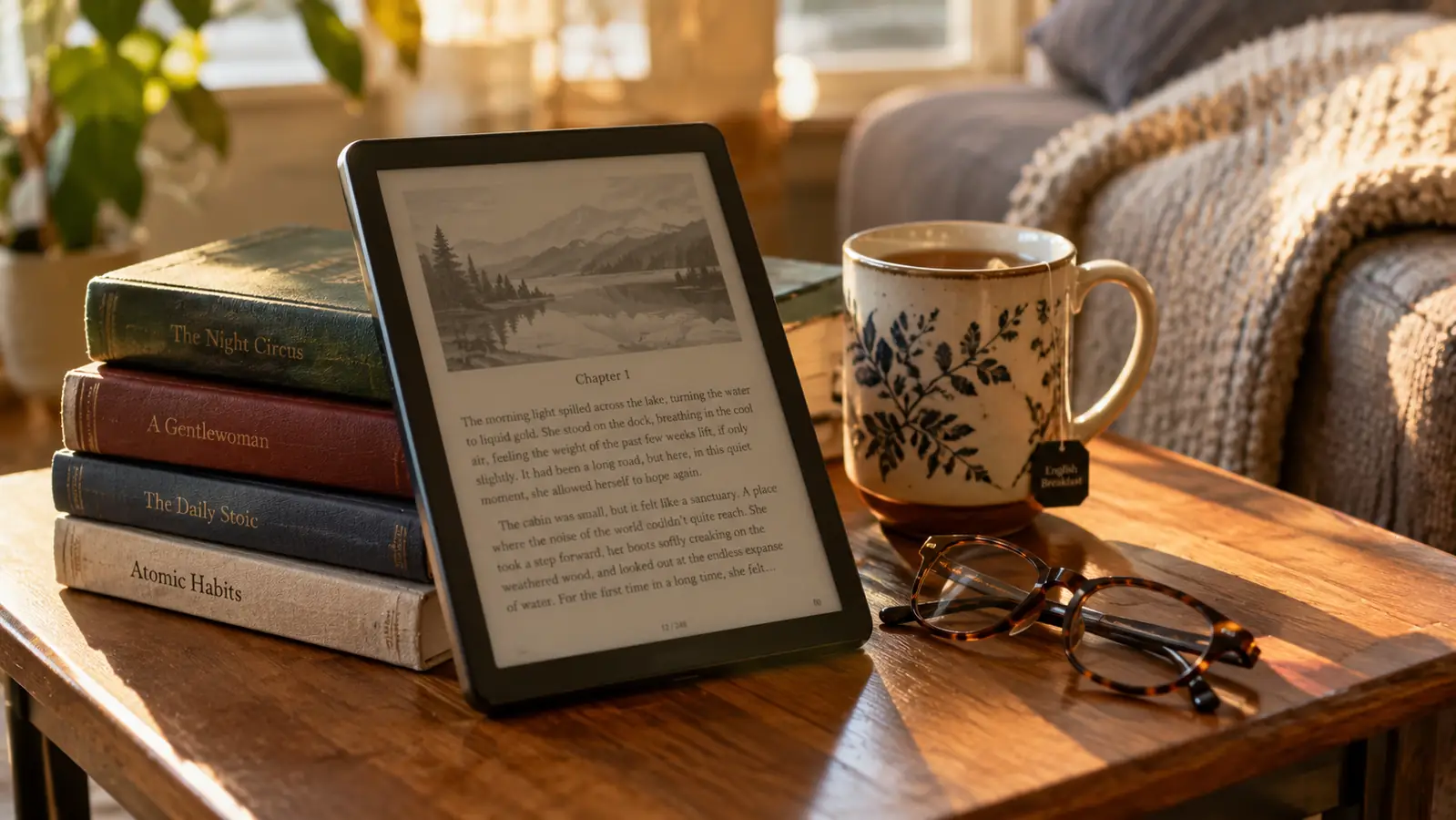
Here's the thing about being a librarian: you learn to love the physical book, but you also learn to love the loan. My library card is the most-used thing I own. Most of what I read comes through digital lending, which means it lands on a screen, not a page. For years I accepted that trade. I got the convenience, and I gave up the margin. The Scribe is the first device I've used that gives me both.
I should be clear about what this device is and isn't. It's a 10.2-inch e-ink screen, much bigger than my Paperwhite, and it comes with the Premium Pen in the box. It's heavier than my Paperwhite, so I don't read it in bed; it's a kitchen-table or lap device. It's not waterproof, so it never goes near the porch in a summer storm. But for the way I read history and biography, with a pen in my hand and an argument to make, it has quietly changed my habits.
I spent 32 years telling kids not to write in library books. Last month I wrote in a library book on purpose, then deleted the note, and felt like I'd gotten away with something.
Write in every book you borrow, then erase it like it never happened
The Kindle Scribe's handwritten sticky notes let you mark up Kindle books without marking the page. Check today's price on Amazon and see if it fits your reading habits.
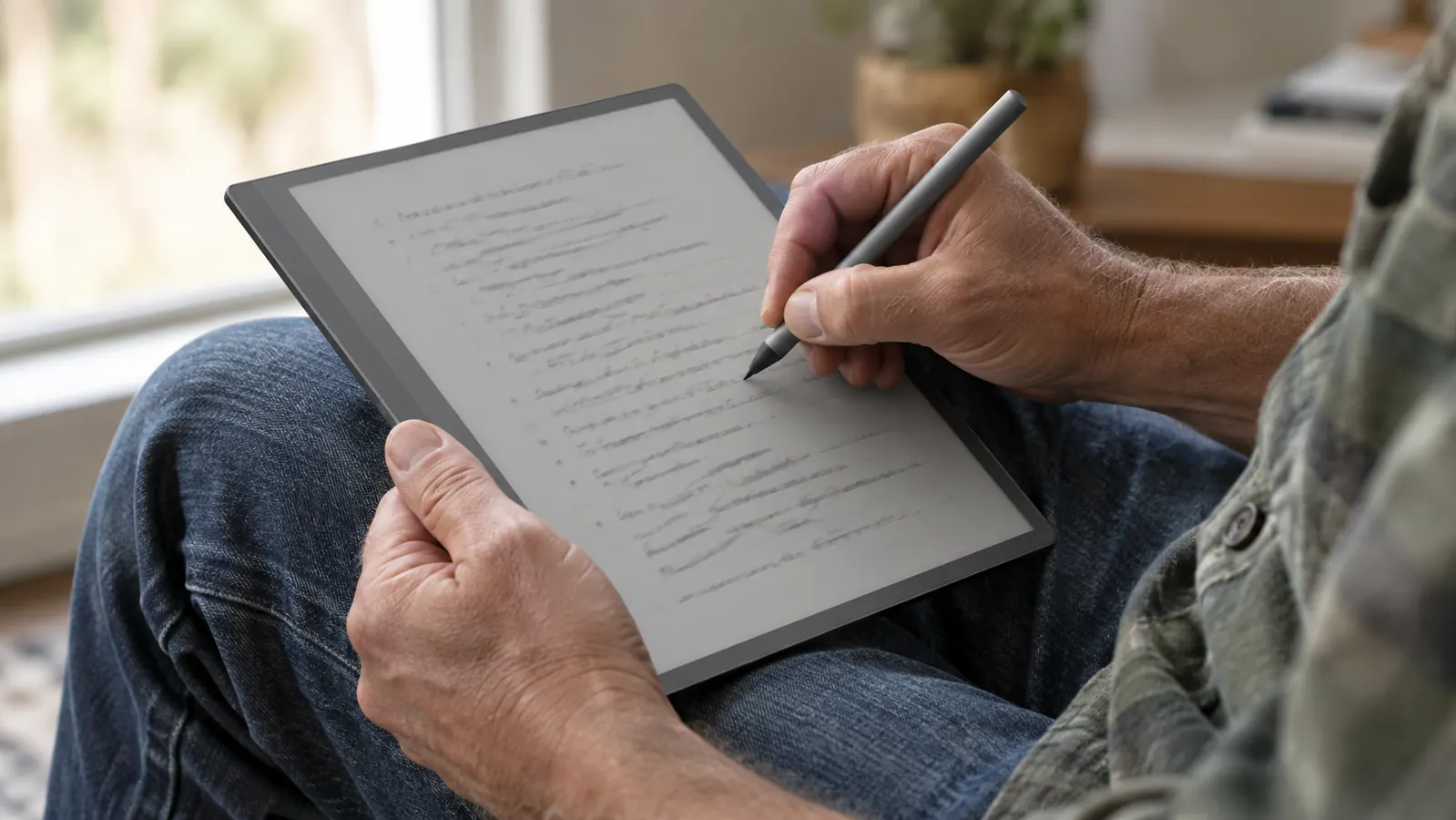
Amazon Check Today's Price on Amazon →The way it works is simple enough that I figured it out without the manual, which is high praise from someone who reads manuals for fun. While you're reading a Kindle book, you tap the page and choose the note option, then write with the pen right on the screen. Your handwriting sits in the margin like a sticky note, attached to that exact spot. When you're done with the book, you can delete the notes and the page is clean again. The book itself is untouched.
For a library-loan reader, that's the whole ballgame. I can underline a passage in a book I have to return in three weeks, write 'this is the thesis' next to it, and know I'll find it again when I buy my own copy later. I can argue with the author in the margins and then erase the argument when I'm done, which is more than I can say for the arguments I have with Dale about the thermostat.
The pen itself matters more than I expected. The Premium Pen has a soft tip that writes like a felt-tip on paper, not like a stylus on glass. There's a satisfying bit of drag. My right thumb has mild arthritis, so I was worried about grip, but the pen is light and I can hold it the way I hold a real pen. I've written pages of volunteer notes without my hand cramping, which is more than I can say for my old paper notebook habit.
I also use it for the thing I bought it for: notes for my Friends of the Library group. I keep the meeting agenda, the book-sale inventory, and the list of which volunteers are bringing cookies, all in one notebook that syncs to my phone. I stopped losing my to-do lists somewhere around the second week. That alone would have justified the purchase, but the margin notes are the reason I reach for it every day.
There are things I'd change. The Scribe is a two-hand device, not a one-hand bedtime reader, so it hasn't replaced my Paperwhite for novels. It's not waterproof, which matters to someone who reads on the porch in summer. And the notebook features are deep enough that I'm still finding new ones, which means I occasionally spend ten minutes poking at menus when I meant to be reading. None of that changes what it does well.
What I'd Tell You If We Were Sitting at My Kitchen Table
If you're a novel reader who never writes in books, the Scribe is probably more than you need. My Paperwhite is still my bedtime companion, and it should be yours too. But if you read nonfiction, if you read with a pencil in your hand, if you've ever finished a library book and wished you could remember which page had the good quote, this is the device that fixes that. It's not a replacement for your e-reader. It's the one you pick up when you want to think.
I'd also tell you to be honest about where you'll use it. It's a kitchen-table and armchair device, not a bed device. It's a lap device, not a pocket device. If that matches your life, you'll use it every day. If it doesn't, you'll leave it on the shelf, and a device that sits on a shelf is just an expensive way to hold dust.
And I'd tell you this: there is a particular joy in writing in a book again, even a digital one. After 32 years of telling kids to keep their opinions out of the margins, I've learned that the margins are exactly where opinions belong. The Scribe just gives you a place to put them that doesn't ruin the book for the next reader. That feels like the kind of compromise a librarian can live with.
Give your margins a place to live
The Kindle Scribe comes with the Premium Pen and a 10.2-inch e-ink screen built for reading and writing. See today's price on Amazon and decide if it belongs on your kitchen table.
Amazon Check Today's Price on Amazon →