

It was a cold night last December, the kind that makes you grateful for flannel sheets. Dale was asleep. The house was quiet. And there I was, propped against the headboard with my reading glasses on, holding my old Kindle from 2015 at arm's length, squinting at a page that seemed dimmer every week.
I spent 32 years as a middle-school librarian, so I know what a tired eye looks like. I also know what a person does when they refuse to admit their eyes are changing. They hold the device closer. They lean forward. They blame the lighting in the room. Then they rub their eyes and start the next chapter anyway, because a good mystery will not wait.

That was the pattern until mid-December, when I finally replaced that old Kindle with an Amazon Kindle Paperwhite. I will not pretend I researched it for weeks. I read the reviews, I knew the screen size I wanted, and I ordered it online the same day. It arrived in a plain box, and I set it up that evening with a cup of tea on the kitchen counter.
The first night, I took it to bed and adjusted the warm light until the page looked like paper under a soft lamp instead of a screen glowing at me. And then I read. For an hour and a half, I read, and I did not once push the device farther away to find the focus. I did not lean forward. I did not squint. I just read, the way I used to read before screens and reading glasses entered the picture.
The difference is not magic. It is the screen. The Paperwhite has a 7-inch glare-free e-ink display, the same technology that made me fall in love with reading on a device in the first place, only much better. There is no backlight blasting at your face. Light sits on top of the page the way it sits on paper. And at night, you can warm it to a tone that does not fight your eyes.
The first night, I read for an hour and a half without once pushing the device farther away to find the focus. That had not happened in years.
Your eyes do not have to do the straining
If you read at night and your eyes are tired of bright screens, this is the reader I reached for every single night for months.
Amazon Check Today's Price on Amazon →I have now had this Amazon Kindle for about ten months, and I can tell you what holds up. The battery genuinely lasts weeks. I charge it with the same USB-C cable I use for everything else, and I stop thinking about power the way I stopped thinking about page numbers. The 16GB storage holds far more books than I will ever read at once, which matters because I borrow most of my reading from the public library, and those loans land right on the device through the Libby app's 'Read with Kindle' option.
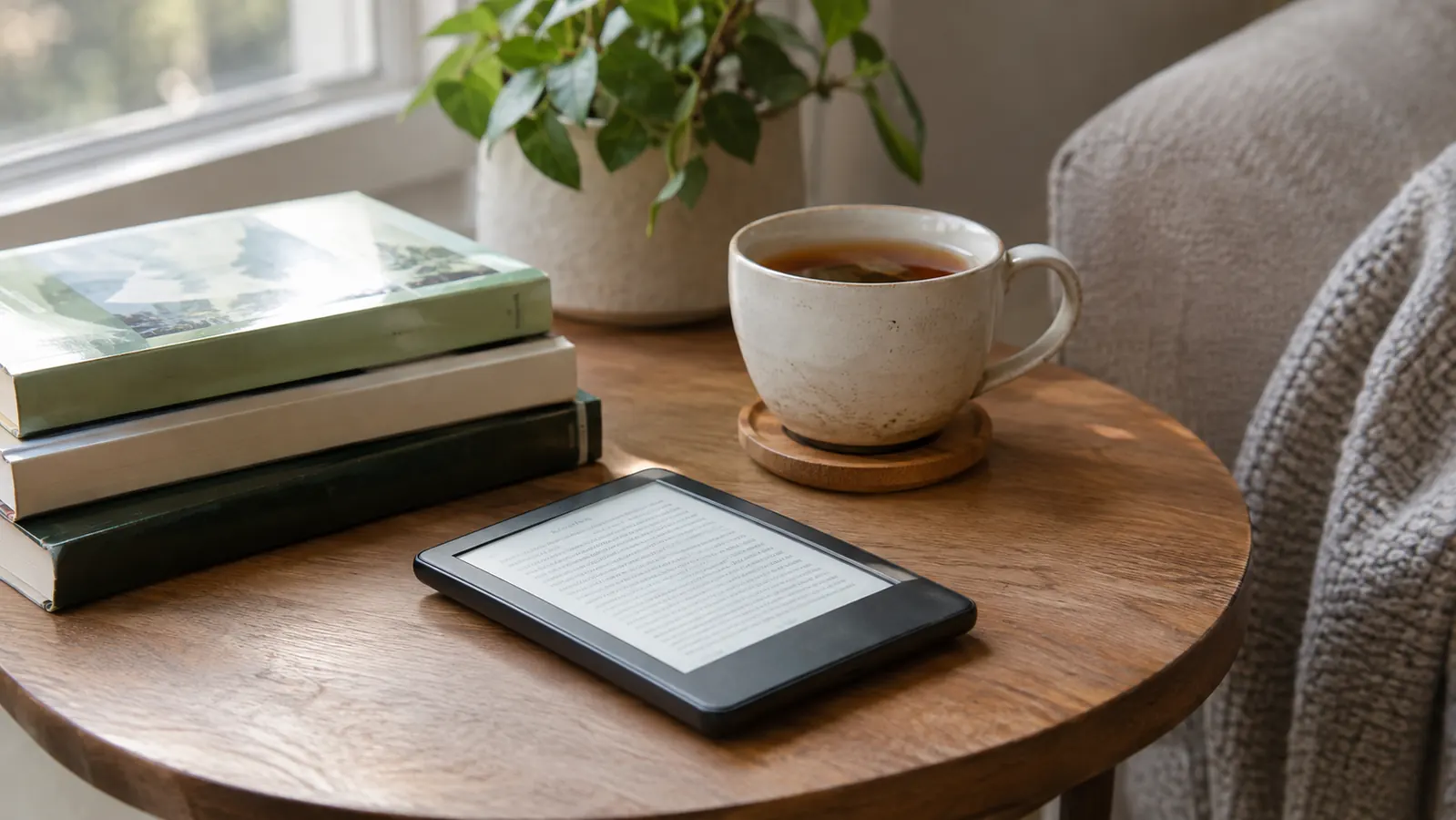
The library piece is the detail people underestimate. I put a hold on a book from my library's digital collection, it becomes available, and I tap a button. The book appears on the Kindle as if it had always been there. When the loan ends, it quietly goes back. No late fees, no trips, no clutter. For someone who reads two or three books a week, that single feature is the reason the device earns its place on my nightstand.
It is not a perfect object. There are no physical page-turn buttons, so you tap or swipe the screen, and on nights when my thumb arthritis flares, I switch to a different reader that has buttons. I also dropped this one once, off the kitchen counter onto tile, and the case I bought the same week took the hit. The Kindle itself was fine. I read it in bed in its case with the warm light on, never dark mode, because dark mode has never felt like paper to me.
Amazon's star ratings for this model are strong, and I understand why. It is not the cheapest reader, and it is not the fanciest. But it is the one that made me stop straining, and that is the whole job.
The case deserves a mention because it is the difference between a device that lives in a drawer and one that lives in your hand. I bought a CoBak stand case the same week I bought the Kindle, and the cover wakes the screen when I open it and puts it to sleep when I close it. The back folds into a stand, which means I can prop the reader on the kitchen counter while I look up a recipe, or on the tray table when I am on the porch in summer. It tips over on soft surfaces, so I do not use it propped on blankets, but on a table or a counter it is exactly right.
What I'd Tell You If We Were Sitting at My Kitchen Table
If you came over and asked whether this reader is worth it, here is what I would say between sips of tea. The screen is the thing. If you read at night, the warm light alone is worth the move from an older Kindle or a phone. If you borrow from the library, the 'Read with Kindle' option means the device earns its keep in the first month. And if you are worried about learning a new gadget, do not be. I set mine up in an evening, and I am a retired librarian who still calls the remote 'the clicker.' And if it does not suit you, do not force it. Reading is supposed to feel good, and the right tool is the one you reach for without thinking.
The reader that ended my nightly squint
If a bright screen has been making reading feel like work, the Amazon Kindle Paperwhite is the fix that worked for me.
Amazon Check Today's Price on Amazon →